
Comprehensive Medical Eye Care in Western Maine
Many chronic eye diseases begin quietly, developing without obvious symptoms or pain until permanent vision loss has already occurred. Eye exams are your first line of defense against these conditions.
A comprehensive eye exam does more than evaluate your vision. It provides a clear view into your systemic health. Major systemic conditions, including diabetes, heart disease, and high blood pressure, frequently cause visible changes within the retina and blood vessels that our optometrists can detect during a routine visit.
To provide the most thorough evaluation possible, patients may be referred between our Rumford and Bethel locations for specific diagnostic testing as needed. Our collaborative approach helps identify risks early and establishes a baseline for ongoing care.
Book AppointmentDiabetic Eye Disease
Diabetic eye disease refers to a group of eye problems that can affect individuals with diabetes, primarily stemming from damage to the delicate blood vessels of the retina. The two most common complications are diabetic retinopathy and diabetic macular edema, which result from periods of uncontrolled blood sugar.
Because these conditions often progress without early warning signs, annual comprehensive eye exams are crucial for anyone living with diabetes. We track changes to the eyes over time, using retinal imaging, OCT scans, and careful monitoring of any vision changes.
Glaucoma Management
Glaucoma is a group of progressive eye conditions that cause damage to the optic nerve, which is responsible for sending visual information from the eye to the brain. Often associated with elevated intraocular pressure (IOP), glaucoma typically affects peripheral vision first. Because central vision remains clear until the advanced stages, many people are unaware they have the condition during the early stages.
We monitor for glaucoma using a suite of diagnostic technologies to track nerve health and function:
- Optical coherence tomography (OCT): High-resolution cross-sectional scans that measure the thickness of the retinal layers and the optic nerve fibers.
- Retinal imaging: Digital photography is used to document and track the physical appearance of the optic nerve head over time.
- Applanation tonometry: A precise method used to measure the internal pressure of the eye (IOP).
- Visual field testing: An assessment that maps your peripheral vision to detect early signs of blind spots.
For those diagnosed with glaucoma, we work to manage the condition primarily through prescription eye drops designed to lower intraocular pressure. Additionally, we provide comprehensive surgery co-management and will refer you to a trusted specialist if advanced interventions are required.
Age-Related Macular Degeneration (AMD)
AMD is a condition that affects the macula, a small part of the retina that controls sharp, central vision. As AMD progresses, it can make everyday tasks like reading, driving, and recognizing faces increasingly difficult, though peripheral vision typically remains intact. AMD is generally categorized into “dry” (gradual thinning of the macula) and “wet” (growth of abnormal, leaking blood vessels).
We monitor for AMD using precise diagnostic protocols:
- OCT and retinal imaging: These tools allow us to view the deeper layers of the retina to identify drusen (yellow deposits) or fluid retention.
- MPOD (Macular Pigment Optical Density) testing: This measures the density of the protective pigment layer in your macula, which filters harmful blue light. It can indicate your risk factor for developing AMD.
For patients identified as high-risk or currently diagnosed with dry AMD, targeted nutritional support can help slow progression. We offer EyePromise supplements, which provide tailored formulations of zeaxanthin, lutein, Omega-3 fatty acids, and other essential antioxidant vitamins to support macular health.
If the condition transitions to the more aggressive wet form, we provide immediate referrals to specialists for advanced therapies.
Cataract Management
A natural consequence of aging, a cataract is the gradual clouding of the eye’s natural lens, which sits behind the iris. Over time, proteins within the lens clump together, preventing light from focusing sharply on the retina. This leads to symptoms such as hazy or blurred vision, increased sensitivity to glare (especially during night driving), and faded color perception.
During regular examinations, we monitor for cataracts using:
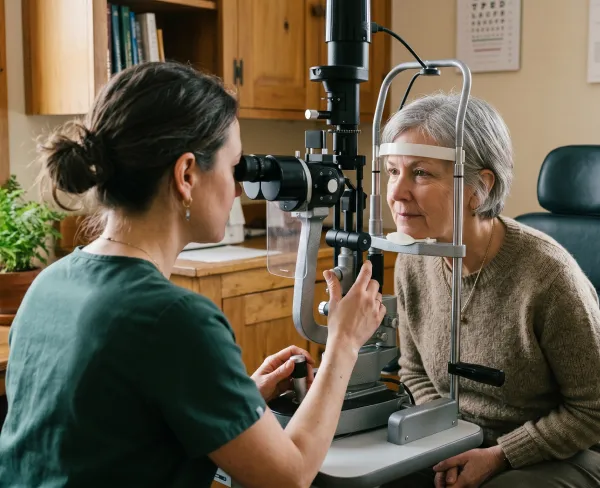
- Slit lamp microscope: An instrument that allows us to examine the lens under high magnification to assess the density and location of the cataract.
- Vision testing: Standardized tests to measure exactly how the clouding is impacting your functional visual acuity.
As cataracts develop, we track visual changes, update prescriptions to compensate for the shifting clarity, and can provide specialized glasses with enhanced contrast to improve daily comfort.
When a cataract begins to limit your daily activities and lifestyle, we’ll refer you to a skilled eye surgeon for cataract surgery. Our team handles all pre-operative and post-operative co-management to support you throughout the recovery process.
The Importance of Early Diagnosis
Routine eye exams serve as a primary line of defense in maintaining long-term vision and identifying systemic health changes. Because many serious eye conditions develop silently without pain or early visual disruption, waiting for symptoms to appear can result in irreversible vision loss.
Proactive, regular evaluations allow for timely diagnosis and early intervention, which are critical to managing chronic conditions effectively. By using diagnostics across our locations, tracking structural changes over time, and coordinating closely with specialized physicians when necessary, we provide a structured approach to preserving your vision at every stage of life.
Book AppointmentOur Location
Bethel
- Phone: 207-820-2316
- Email: frontdesk@mtnvieweye.com
Hours
- Monday: 8:00 AM – 5:00 PM
- Tuesday: Closed
- Wednesday: 8:00 AM – 5:00 PM
- Thursday: 8:00 AM – 5:00 PM
- Friday: Closed
- Saturday: Closed
- Sunday: Closed
-
* Our Bethel location is closed from 12:00 PM to 1:00 PM each day
Rumford
- Phone: 207-364-4491
- Email: frontdesk@mtnvieweye.com
Hours
- Monday: 8:00 AM – 5:00 PM
- Tuesday: 8:00 AM – 5:00 PM
- Wednesday: 8:00 AM – 5:00 PM
- Thursday: 8:00 AM – 5:00 PM
- Friday: 8:00 AM – 5:00 PM
- Saturday: Closed
- Sunday: Closed
Our Services


Our Brands



Our Google Reviews
Come Visit Us Today